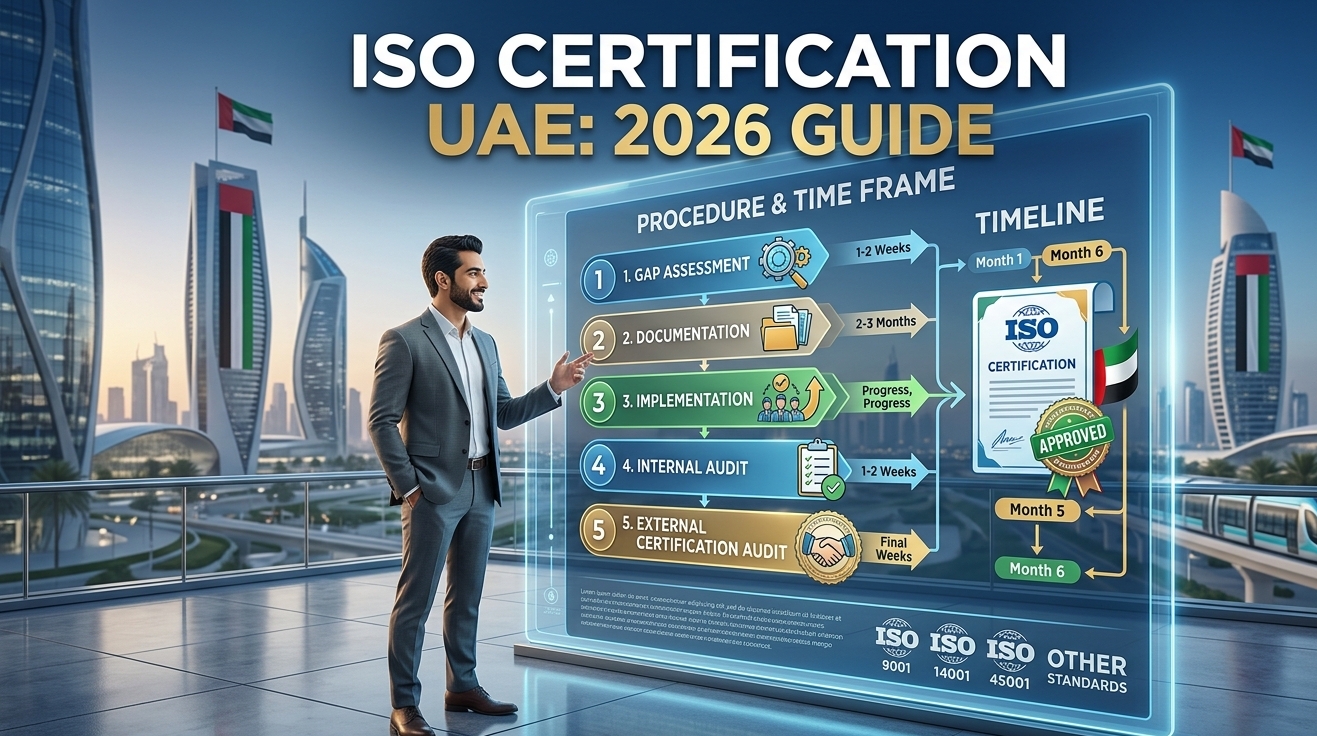
Dubai's corporate landscape has many companies that offer ISO certification services, which is beneficial to clients, but it makes the process of selecting a certification more difficult than it needs to be. Understanding what actually separates a reputable certification company from one that's simply chasing volume makes a real difference to the value you get out of the process.Accreditation Is the First Thing to Check
A certification company's accreditation status is extremely important, as any certification issued by a organization that's never accredited has less credibility before auditors, customers, and tender evaluators. Checking whether a certification company has accreditation from a reputable accreditation body, rather than just claiming that they issue internationally recognized' certificates is the only first step to determine.
Be aware of the difference between consultants and Certification Bodies
Many businesses mistakenly associate ISO Consultants, who assist set up a process for management, with certification bodies, who independently conduct audits and issue certificates itself. They are supposed to play distinct functions, specifically to safeguard that audit's impartiality of the certification body. A business that provides both of these services under one roof for the same client could be a legitimate conflict of interest question worth asking about directly.
The experience of the industry is crucial.
A certified organization with real knowledge of your particular industry will ask sharper, more relevant questions during the audit and will not apply a generic checklist process to a company with unique operational realities. Construction, healthcare, and food production all involve different risks auditing an auditor who is not familiar with those specifics tends to produce a less useful certification experiences overall.
Do not just look at the headline price.
Pricing for certification in Dubai is a bit different, and the cheapest option isn't automatically an ideal choice, but it's worth understanding exactly what's included before committing. Some quotes only cover the initial audit and don't include the regular surveillance audits that are required to keep certification, that can make a low-cost deal into a much expensive, multi-year commitment compared to a comparable price.
You can ask questions about turnaround times in a realistic manner.
Firms that are under deadline pressure and pressured by the approaching deadline, can be lured in by promises of extremely fast certification. An audit that is properly executed takes about a specific period of time, no matter how well motivated the people involved are in the process. And unusually fast turnaround time claims should be treated with caution instead of relief.
Review Reviews from businesses operating in similar sectors
A direct response from other businesses based in Dubai that are in a similar business can provide a greater value than generic reviews, since it can reveal how a company that certifies is in the less glamorous elements of the process for example, scheduling, document support, and dealing with any non-conformities discovered at the time of audit.
Inquire about Ongoing Support, Not Only the Certificate that you received initially.
The certification process isn't one-time as maintaining it will require periodic monitoring audits and eventual recertification. A company that gives clearly-defined, organized ongoing support is likely to make this multi-year relationship more streamlined than one focused on winning the initial engagement.
Have them explain how they handle multi-site or Multi-Emirate Operation
Businesses with multiple offices within Dubai or across a number of emirates, should ask specifically what the company's policy is for multi-site audits. Approaches differ greatly between companies. Certain companies offer an integrated audit program that encompasses all locations on a schedule that is coordinated, while others view each site as a distinct engagement which could have an impact on both cost and the overall reliability of the certified.
Know the Difference Between UKAS, DAC, and Other Accreditation Marks
Certification bodies that operate in Dubai are accredited by several body of accreditation in the nation, like UKAS for the UK or the UAE's individual Emirates International Accreditation Centre, and knowing which accreditation confers more weight with your specific client and tender specifications is more important than assuming that every accreditation mark is accepted internationally.
You must have everything written before You Sign
Verbal assurances about scope, timeframes, and pricing are not as valuable as documents that outline exactly what's covered, what happens if a violation is identified, and how the overall cost will be across the entire three-year cycle of certification rather than just the initial audit. A well-established company will have no hesitation providing this level of detail prior to offering a promise.
You can trust your own impressions based on Initial Conversations
Beyond the verification of credentials and prices and pricing, how a certification company handles your initial queries frequently reveals a lot about their behavior after you've signed an agreement. A company that addresses your concerns without ambiguity, doesn't force you to make a hasty decision, and appears to be interested in your business rather than simply closing a sale is generally a safer long-term partner than one who is primarily focused on a fast signature.
Be on the lookout for high-pressure sales Methods
Some certification agencies operating in Dubai's market compete with excessive sales pressure, which includes artificial urgency around limited-time pricing or claims they are in the process of negotiating with a competitor to secure a time. A legitimate certification body is not required to be relying on this type of pressure because their main selling point is reputation and accreditation rather than a blazing sales campaign, which makes pushy urgency itself a legitimate warning sign.
Choosing the right partner for certification in Dubai relies on verifying credentials with care, recognizing what you're purchasing, as well as valuing real sector experience over the cheapest headline price as the certification itself is only as dependable as the method that made the certification. In the end, businesses that will get the greatest benefits from a certification in Dubai don't necessarily those that chose based on the lowest price alone, but those that were able to vet accreditation, understand the scope of what they were buying, and select a provider compatible with their industry and size. Each of these tests takes the time of a lifetime alone, but in combination they form a solid overview that shields you from the 2 most common outcomes that result from choosing a wrong partner: an unusable certificate, or an expensive ongoing contract. A little extra attention upfront is always worthwhile over the entire long-term certification relationship that is the one that follows. Have a look at the best ISO 14001 Certification for website info.
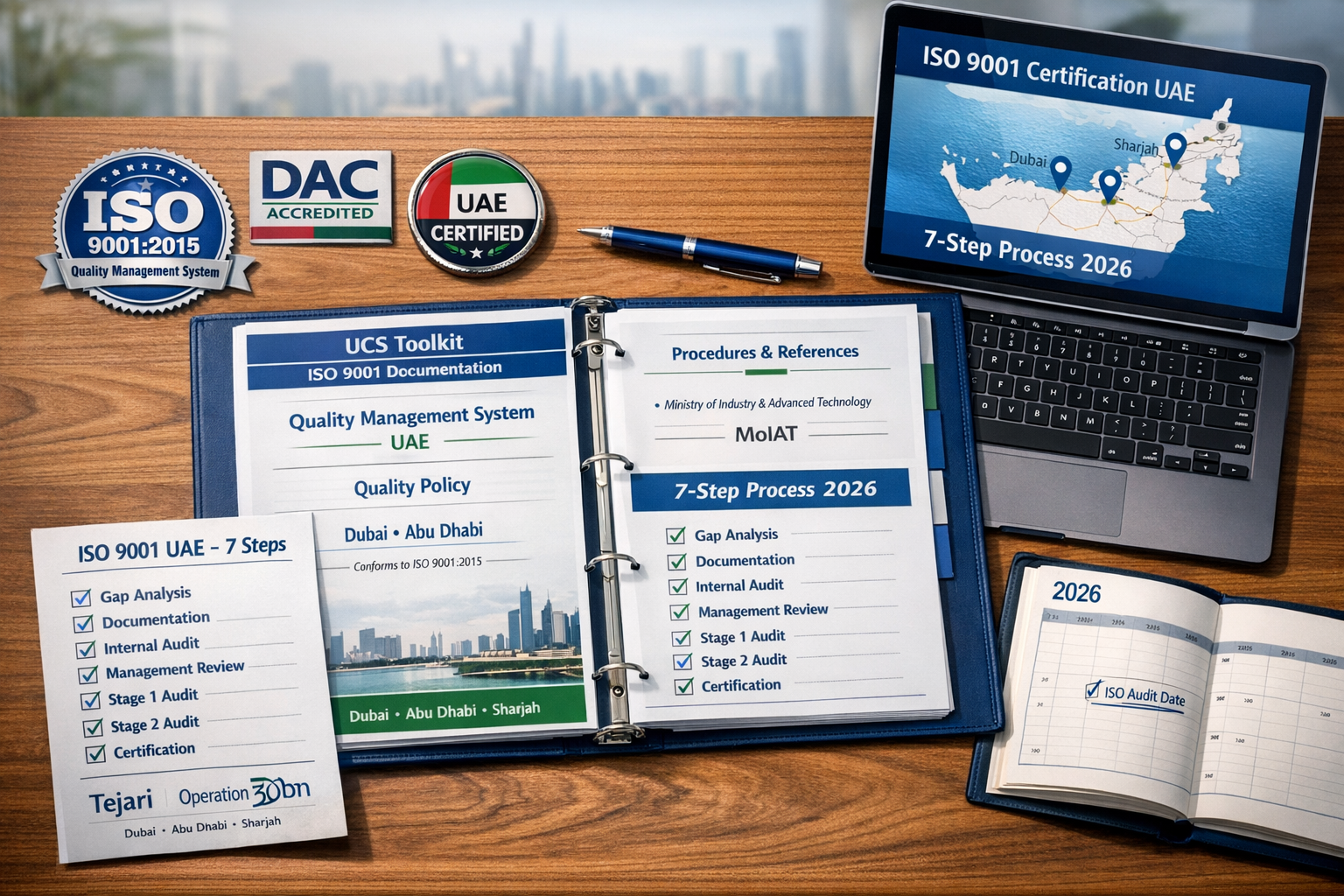
ISO 45001 vs ISO 22000 Which Is The Best Certification Your Firm Really need?
Businesses that are just beginning to gain ISO certification frequently assume that the various standards are widely interchangeable but in reality, ISO 45001 and ISO 22000 address entirely different operational risks and fit very distinct types of businesses. Knowing what each standard covers will make it much easier to recognize which one or whether either fits any of your operations.What ISO 45001 Covers
ISO 45001 is the international standard for occupational safety and health management systems. They concentrate on finding hazards at work, evaluating risks to employees, as well as individuals affected by the operations, and putting appropriate controls in place to prevent injury and ill health. It is applicable to any company with employees and physical operation, but it carries more weight in construction, manufacturing petroleum and natural gas, and logistics, areas where risks for injuries are generally higher.
What ISO 22000 Covers
ISO 22000, by contrast it is the most widely used international standard for the management of food safety systems, which is based around managing and identifying risks across the supply chain of food from handling raw materials to processing, storage and distribution. It's particularly relevant to companies who are part of the food chain in a specific capacity, such as producers, processors packaging manufacturers, processors, and food service operators, rather as businesses in general.
What's the reason?
Both standards follow a similar top-level management system structure. They which shares a common language on risk detection and continual improvements, and are typically marketed alongside each other by certification agencies that provide a broad portfolio of services. This structural resemblance could make them seem more comparable than they are, when the substantive material of each standards addresses the exact same category of risk.
If a business might require Both
A company that manufactures food, for example, genuinely requires both standards instead of picking between them since ISO 22000 addresses the safety of the food product itself however ISO 45001 addresses the safety that the workers producing it. They are separate risk categories and are incorporated into the same industry, which is the reason why so many food-related firms in the UAE are able to hold both certifications simultaneously.
If a Business Definitely requires One
An organisation that does not have involvement in the production of food has no real need for ISO 22000, just as a food distribution company with very little exposure to hazards in the physical workplace could reasonably prefer ISO 22000 over ISO 45001 at least in the beginning, if resources are limited and one risk category is more urgent over the others.
How to Make a Decision if Still Unsure
The easiest way to choose is to chart your operation against each standard's definition rather than making a decision based on the standards your competitors are using. If your business handles services, processes, or food in any capacity, ISO 22000 deserves serious examination. If your activities involve risks to your personnel or visitors whatever the field, ISO 45001 is worth review independently of all food safety considerations.
The certification process for both follows a similar path
Regardless of which standard is applicable regardless of the standard, certification follows a similar framework that includes gap analysis against the relevant standard, adoption in the proper processes and documentation internal audits, and an external certification audit that is two-stage that is followed by regular annual monitoring audits to keep the certificate.
The Costs and Benefits of pursuing Both
Businesses genuinely needing two certifications could be concerned about the possibility of doubling their costs and time, however many find that pursuing both standards in conjunction, via an integrated auditing program that is run by the same certification body, reduces administrative overheads that are duplicated with running two entirely separate, unrelated certification projects at different times.
Common Mistakes Businesses Make in This Decision
One of the most frequent mistakes is pursuing ISO 45001 purely because a competitor is certified before evaluating whether the risk to safety of workers is significant in the organization's own operations or, similarly, pursuing ISO 22000 based on assumption instead of a genuine security role for food within the company. The honest assessment of operational risk rather than from competitor behavior consistently produces a better certification decision.
Getting Expert Input Before Committing
In light of how distinct these two standards are in real terms, businesses who are not sure which of them applies to them can benefit significantly from a brief consultation with a certification body or a consultant before committing to either and since a simple initial discussion on scope can prevent the possibility of a much more costly and time-consuming error later on in the process.
The bottom line for UAE Businesses
Instead of treating ISO 45001 and ISO 22000 as competing options to pick among, the more effective approach is to recognize them as distinct risks that are simply able that both are relevant to some organizations, but not all. A clear assessment of your own risk profile for your operations, instead of simply following what other similar-sounding competitors have done, remains the most trustworthy way to reach the right decision.
Involving Frontline Staff in the Decision
The frontline employees, whether on construction sites or a food production facility often have the clearest practical grasp of where real safety or food handling risks really lie. By involving them effectively in the initial risk assessment for standards, as opposed to thinking of certification as a pure administrative exercise, tends result in a more precise and truly useful management program.
Making the decision among ISO 45001 and ISO 22000 as well as recognizing the need for both, boils down to accurately assessing the risk exposure of your company instead of thinking that ISO 45001 and ISO 22000 are interchangeable options addressing the same problem. Whichever standard or combination of standards, ultimately applies to your business it is the same: creating the most secure, safest and reliable operation rather than simply creating a certificate in order to satisfy some external requirement. This decision doesn't have to be made on its own in the sense that a short chat with an experienced expert who is acquainted with both standards will usually help you determine the best path to take in only one session. Making this decision correctly early is a great way to avoid time and expense further along the certification path. An objective view of the actual activities, and not just a preconceived notion is the best starting point every time. This one step of clarification often saves months of avoidable confusion later. It pays dividends for precision throughout the remainder part of the procedure. Follow the top rated ISO 20000 Certification for site recommendations.